
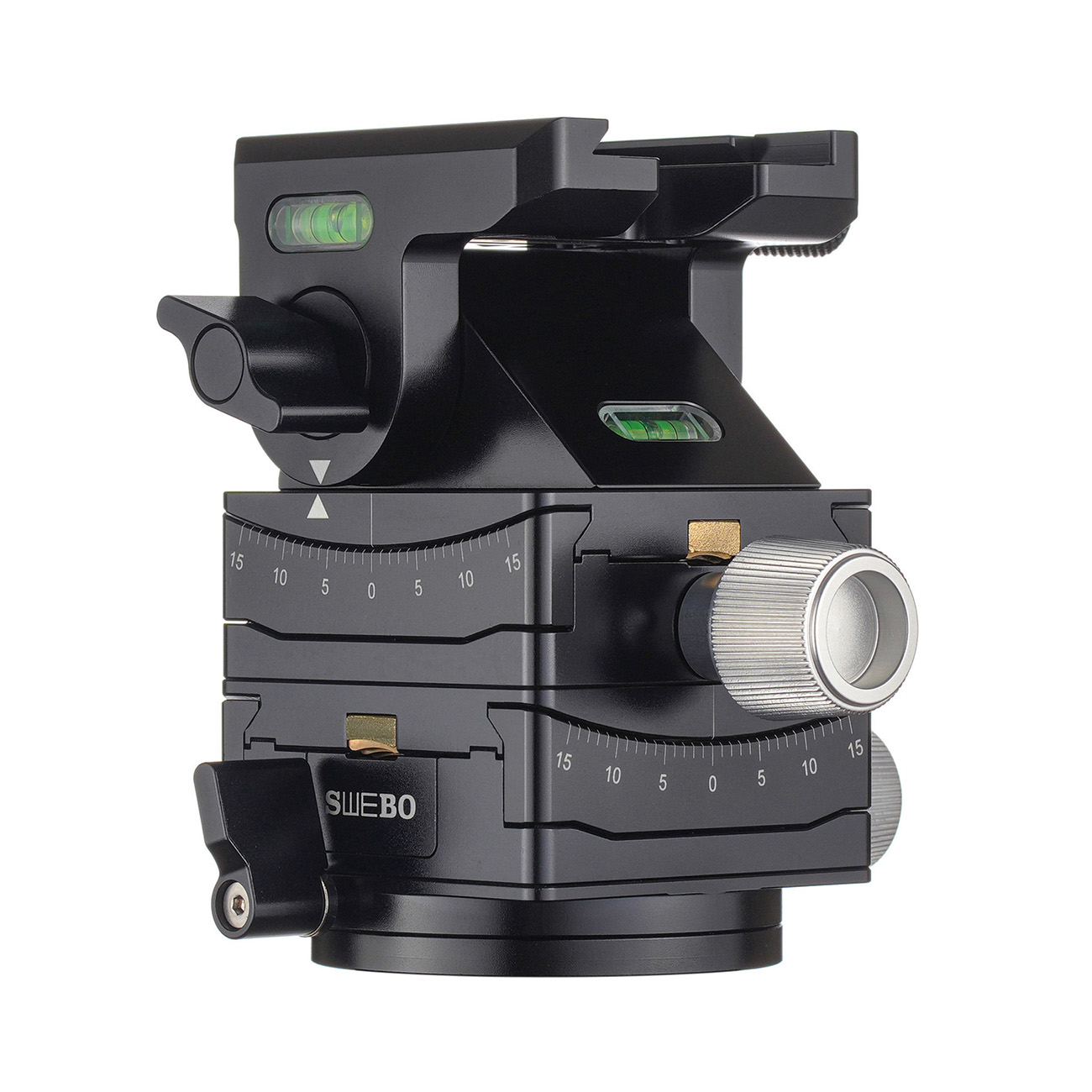
The SWEBO Cube is designed for precise composition, from aligning horizons and architectural lines to framing landscapes, interiors and commercial still life. It also suits photographers working with conventional cameras and lenses.
Two tilt axes: position quickly, then refine
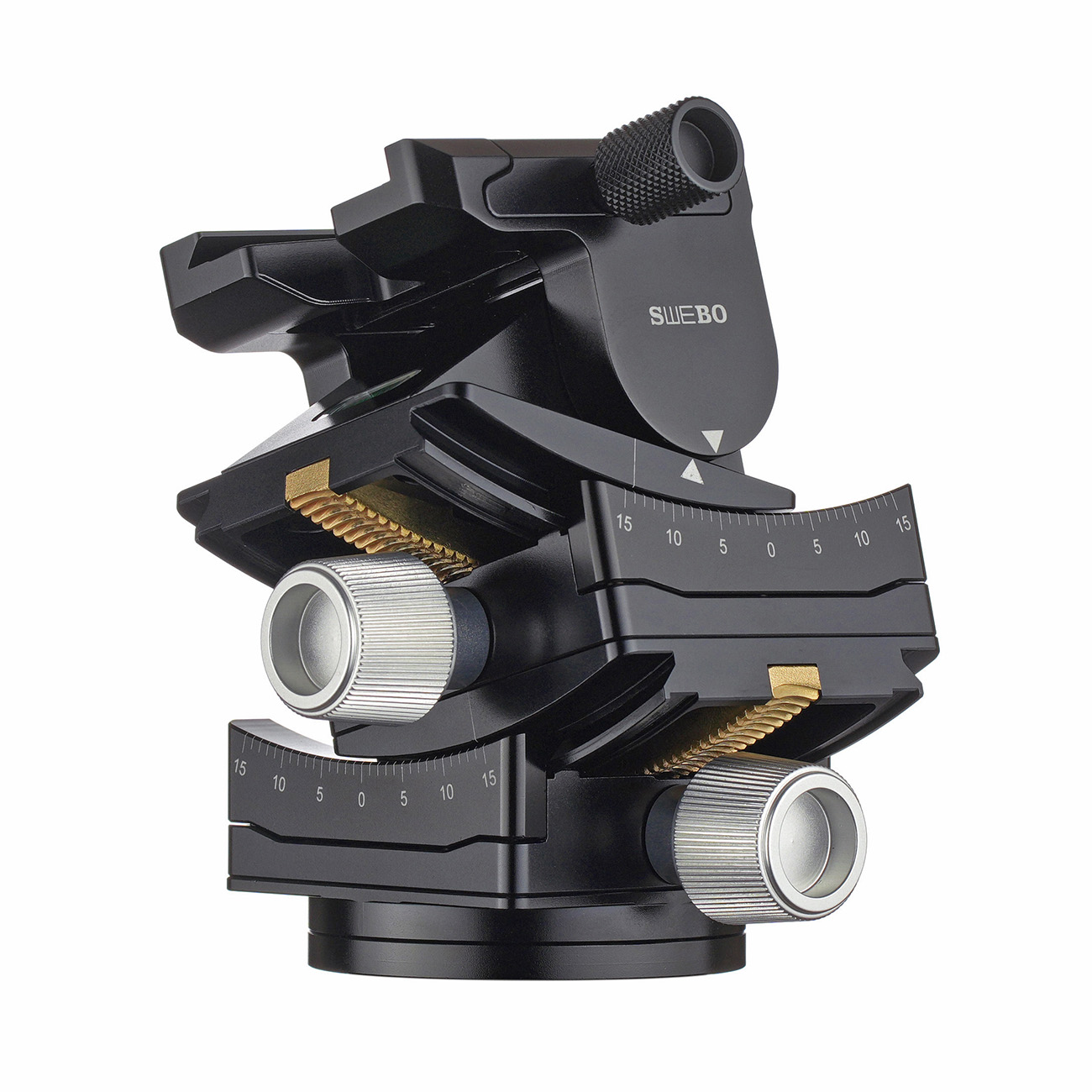
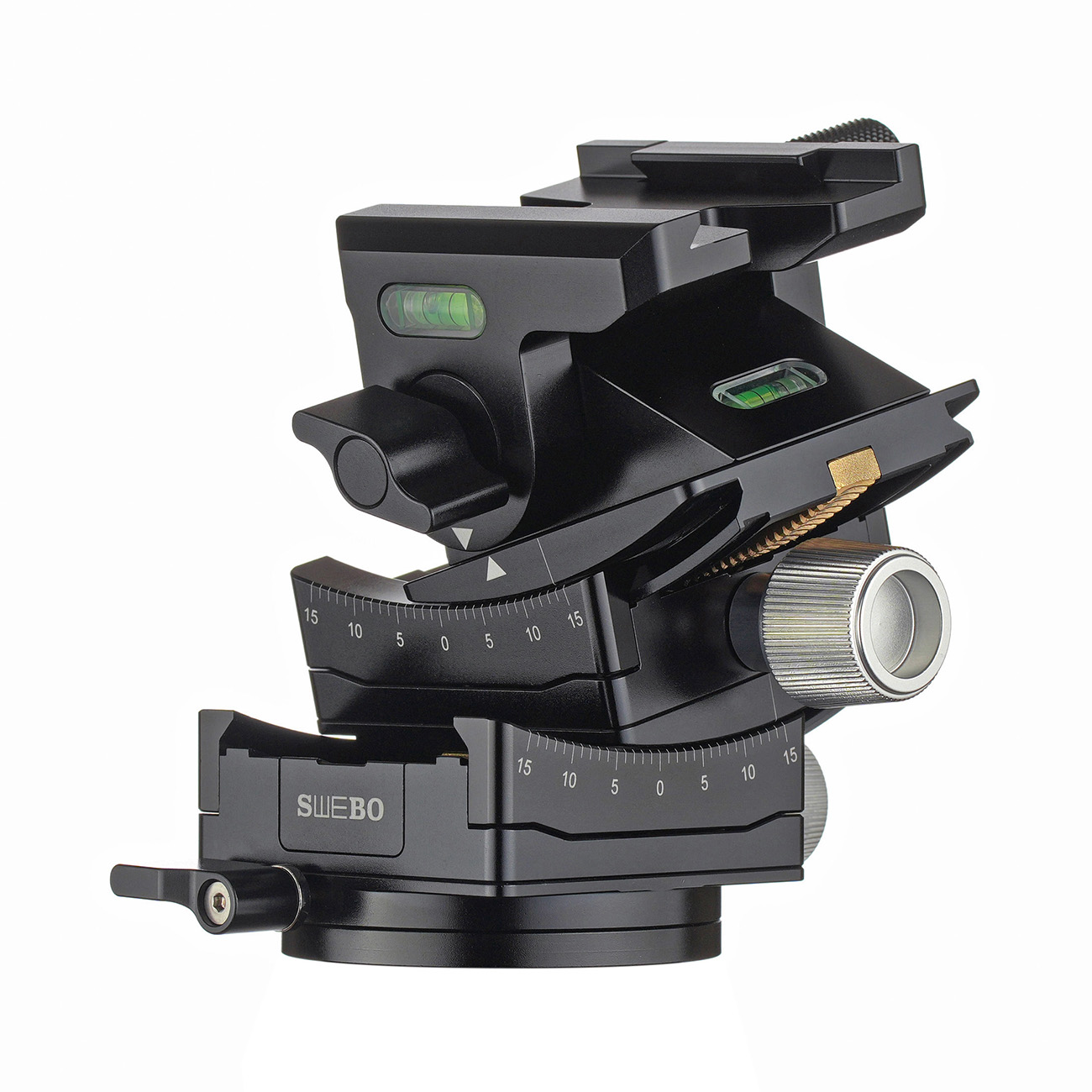
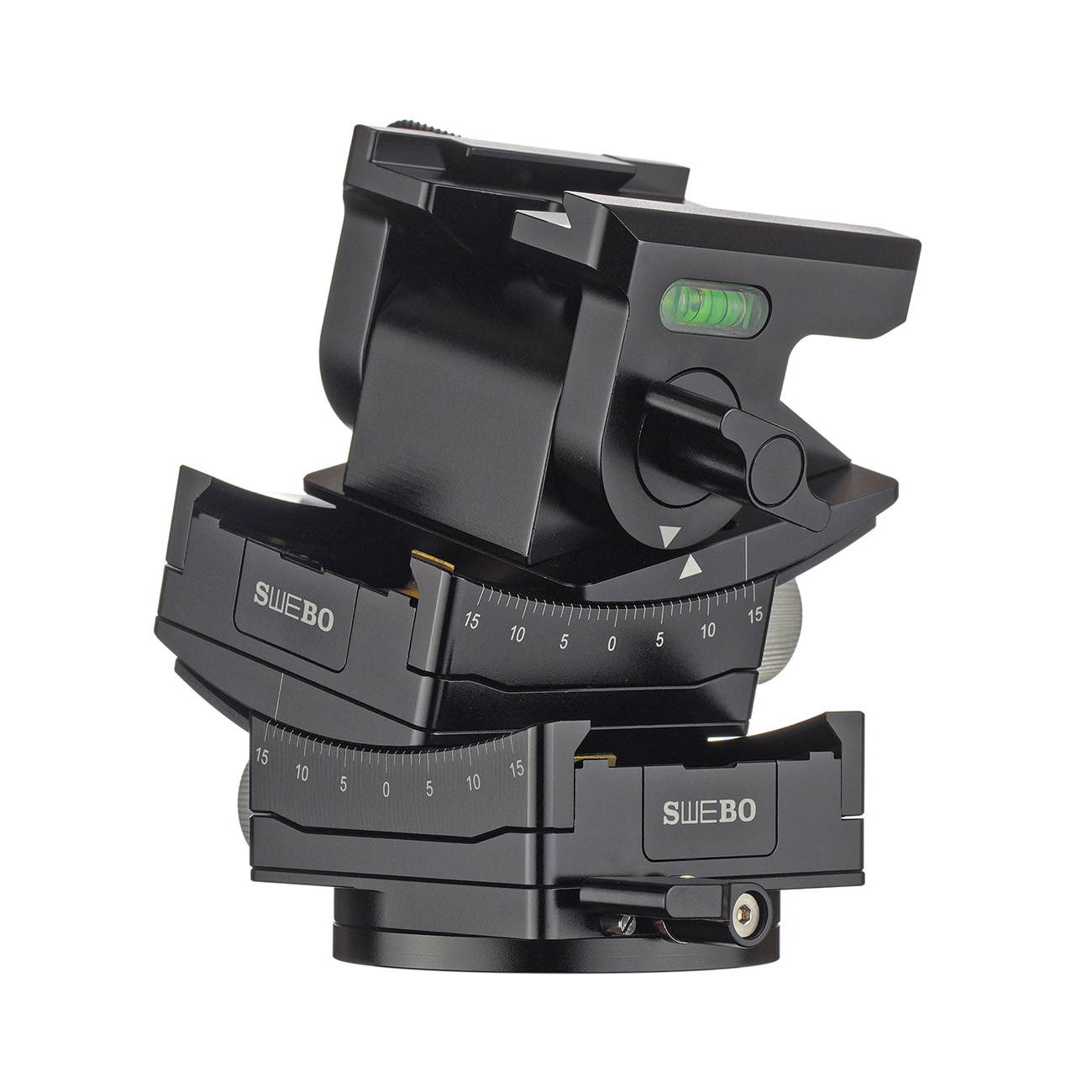
Two separate, parallel tilt axes divide quick positioning from geared fine adjustment. Tilt the camera by hand to establish the composition, lock the quick-tilt axis, then refine the angle with the geared control. Combined movement provides 90° downward and 67° upward tilt.
The geared tilt and horizon-leveling modules each offer ±15° adjustment. Both are self-locking, holding their position without a separate locking step.
From a specialist head to your everyday tripod head
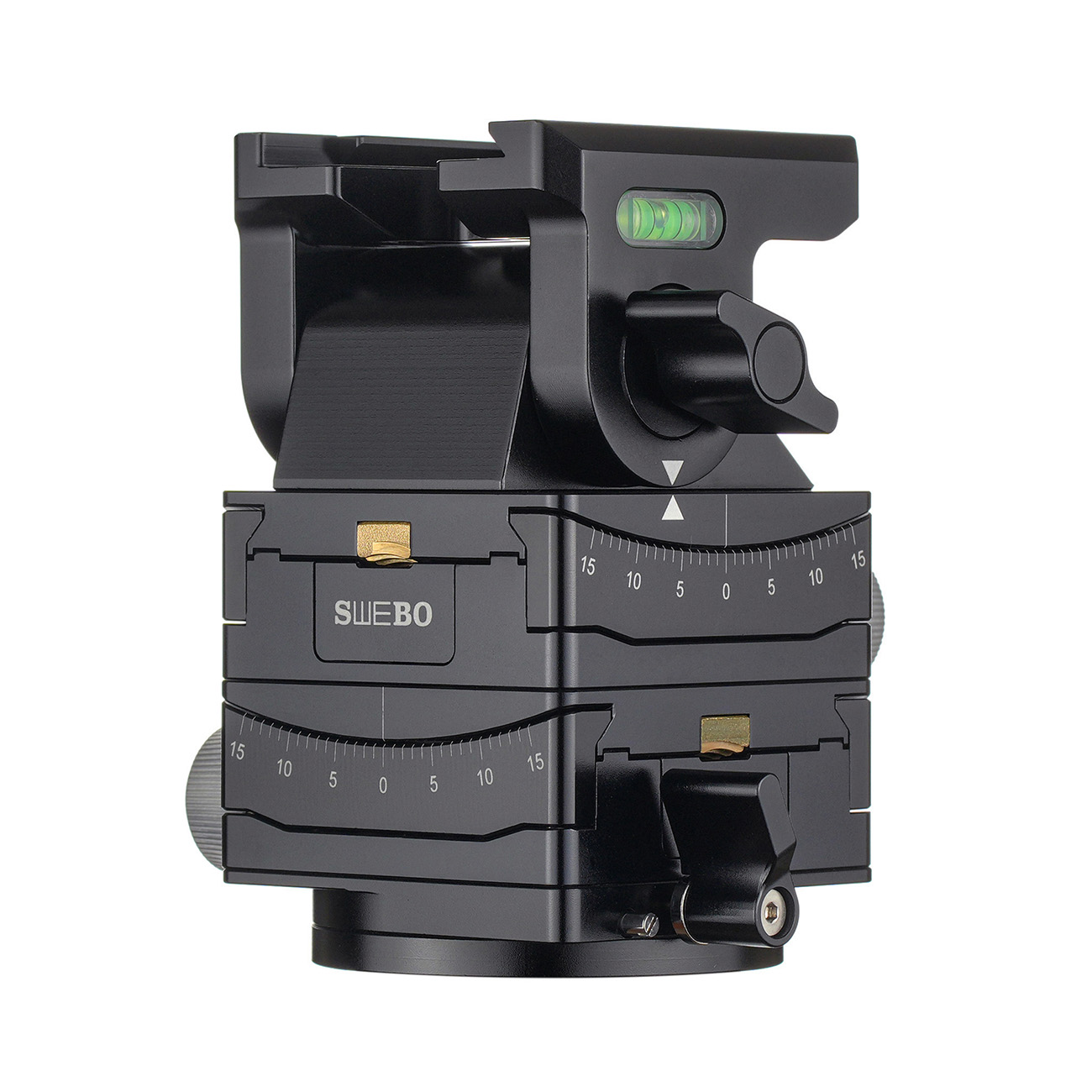
The dual-axis tilt design extends the role of this type of precision head beyond specialist composition work. The ND252 combines fine framing control with quick changes in shooting angle, making it suitable to keep on your tripod for everyday photography and reducing the need to change heads as shooting requirements change.
From ND2 to Cube: three years of development
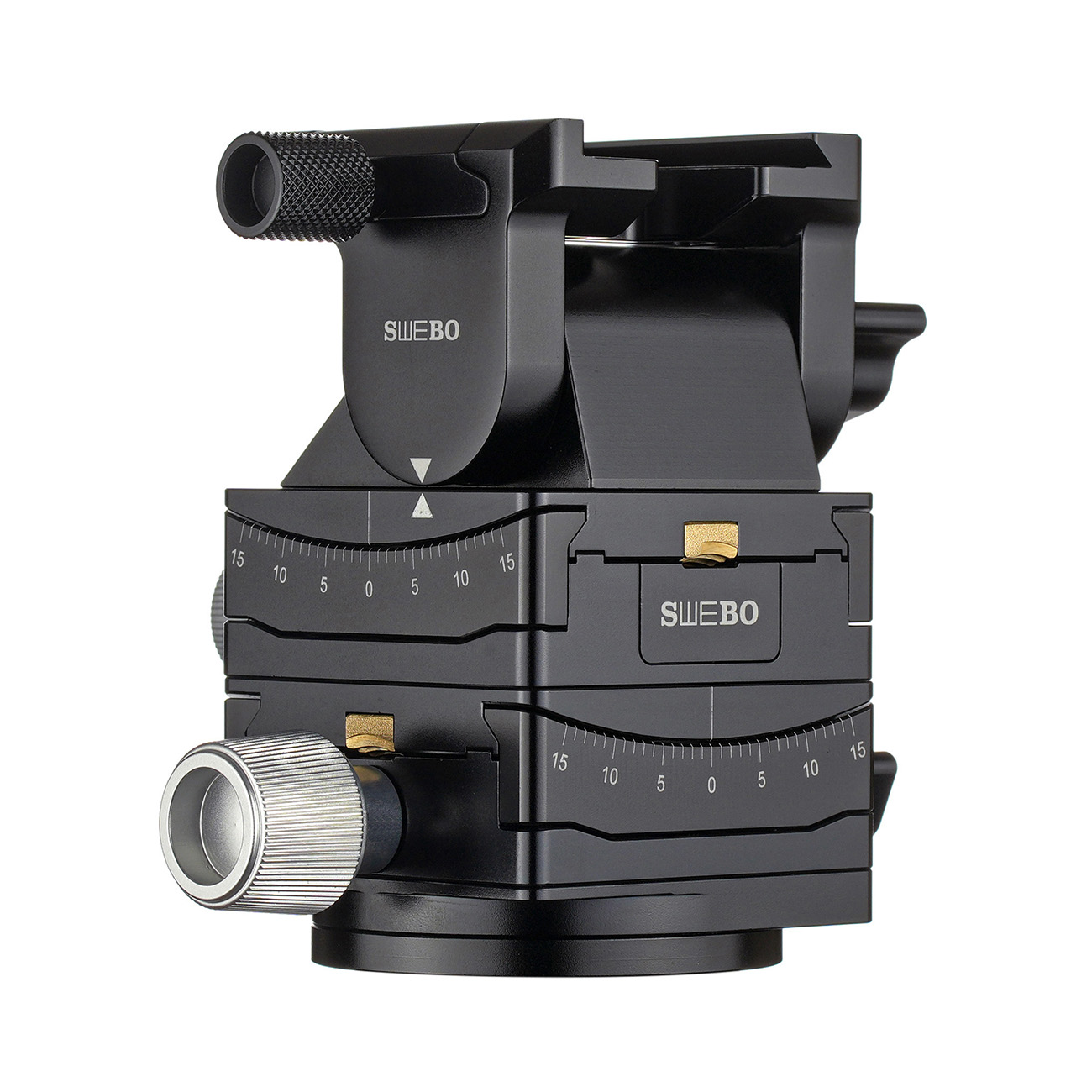
The previous ND2 used a small-diameter worm wheel on a single tilt axis to provide a wide adjustment range. Small-batch trials revealed limitations in operating effort, locking and control of mechanical play.
A large-diameter, arc-guided worm mechanism supports smooth, stable fine adjustment within a limited range. A smaller worm wheel can provide a wider angle of movement, but requires a trade-off between operating effort and stability.
The Cube assigns fine adjustment to the large-diameter, arc-guided mechanism, while a separate quick-tilt axis provides speed and range. Precise control therefore does not require slow geared movement through the entire tilt range. Compared with the ND2, the fine-tilt axis sits closer to the camera axis to support precise composition.
100 mm overall height, a low centre of gravity
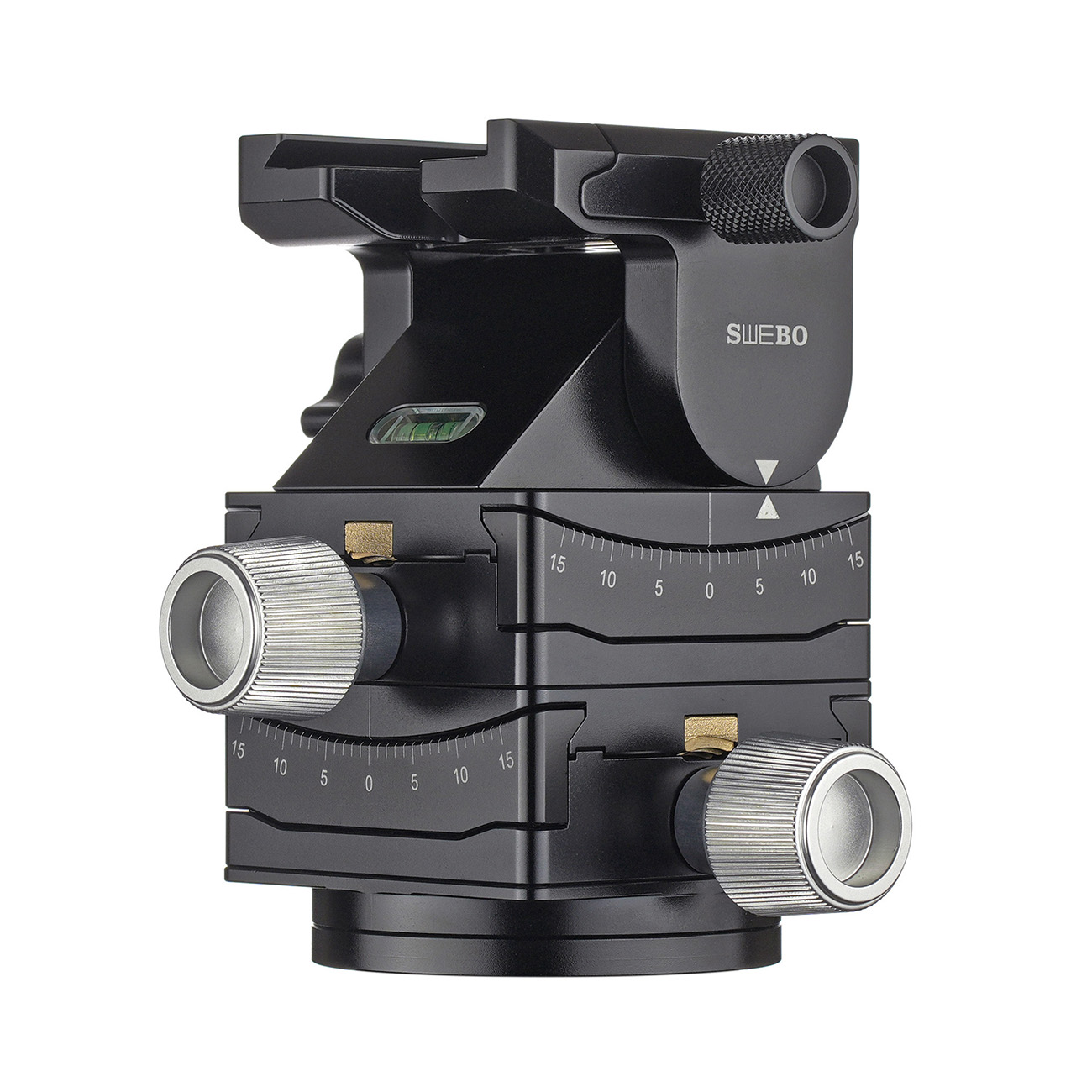
The compact, low-centre-of-gravity design keeps the camera closer to the tripod's support, helping provide a stable platform. Together with separate quick-tilt and geared controls, it makes tilt adjustment more manageable. The 100 mm dimension is the overall head height, not a measured centre-of-gravity height; the camera must still be supported during quick-tilt adjustment.
Mounting and expansion
The Arca-compatible clamp includes a 60 mm quick-release plate. An optional S64 panoramic module can be added above the head for stitched panoramas; it is not included. The base provides 360° manual panning with a separate lock and a 3/8-inch tripod socket.
Specifications
| Weight | 670 g, excluding the quick-release plate |
| Height | 100 mm |
| Width | 104 mm |
| Length | 86 mm (dimensions include knobs) |
| Base diameter | 60 mm |
| Base pan | 360°, manually adjusted and locked |
| Horizon adjustment | ±15° |
| Geared tilt adjustment | ±15° |
| Combined tilt | 90° down / 67° up |
| Recommended maximum load | 10 kg |
| Clamp | Arca-compatible |
| Knobs | Silver |
| Included | 60 mm quick-release plate |
Operating note
Support the camera with your right hand while adjusting the quick-tilt lock with your left. Some friction can be retained, but always hold the camera during adjustment and lock the axis before releasing it.