
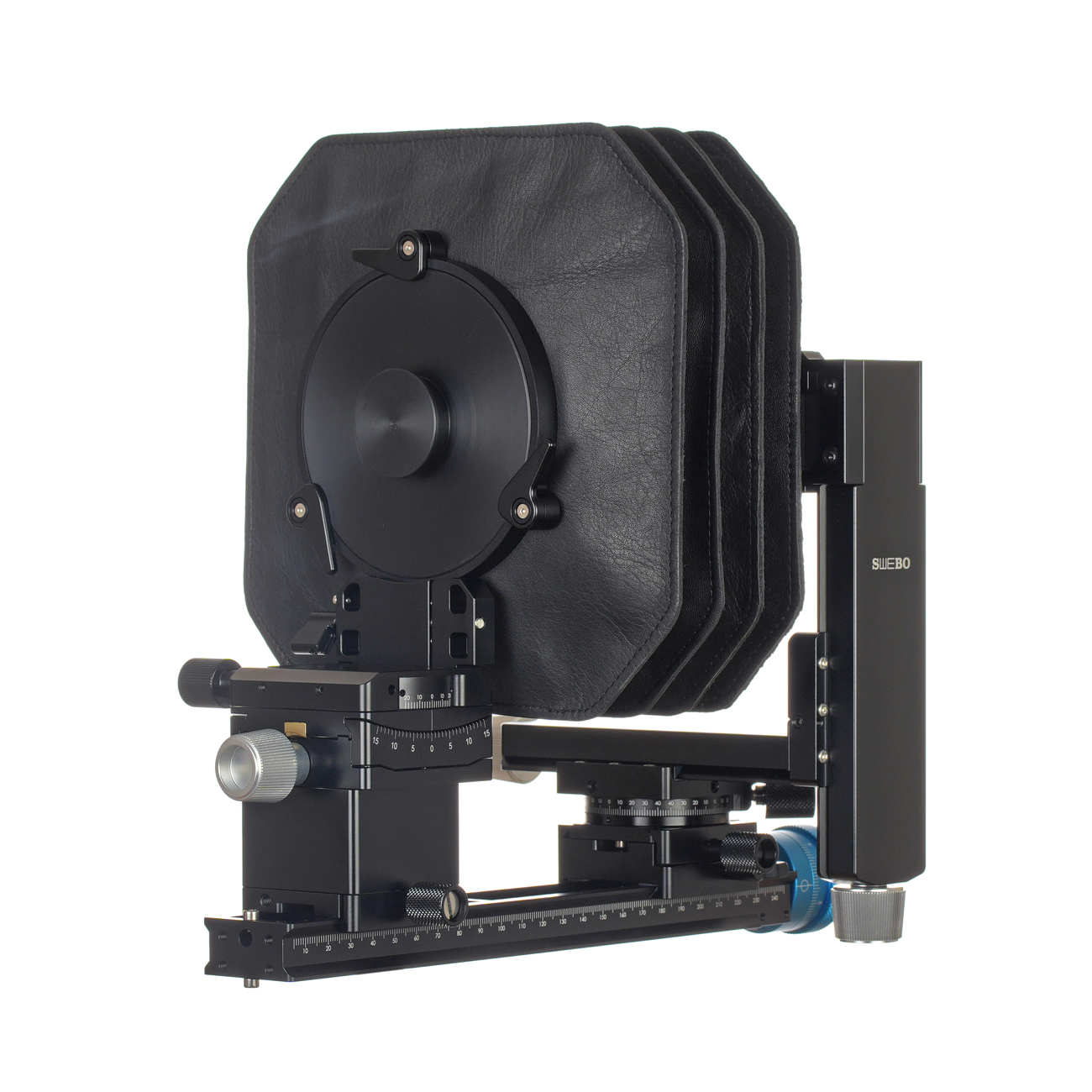
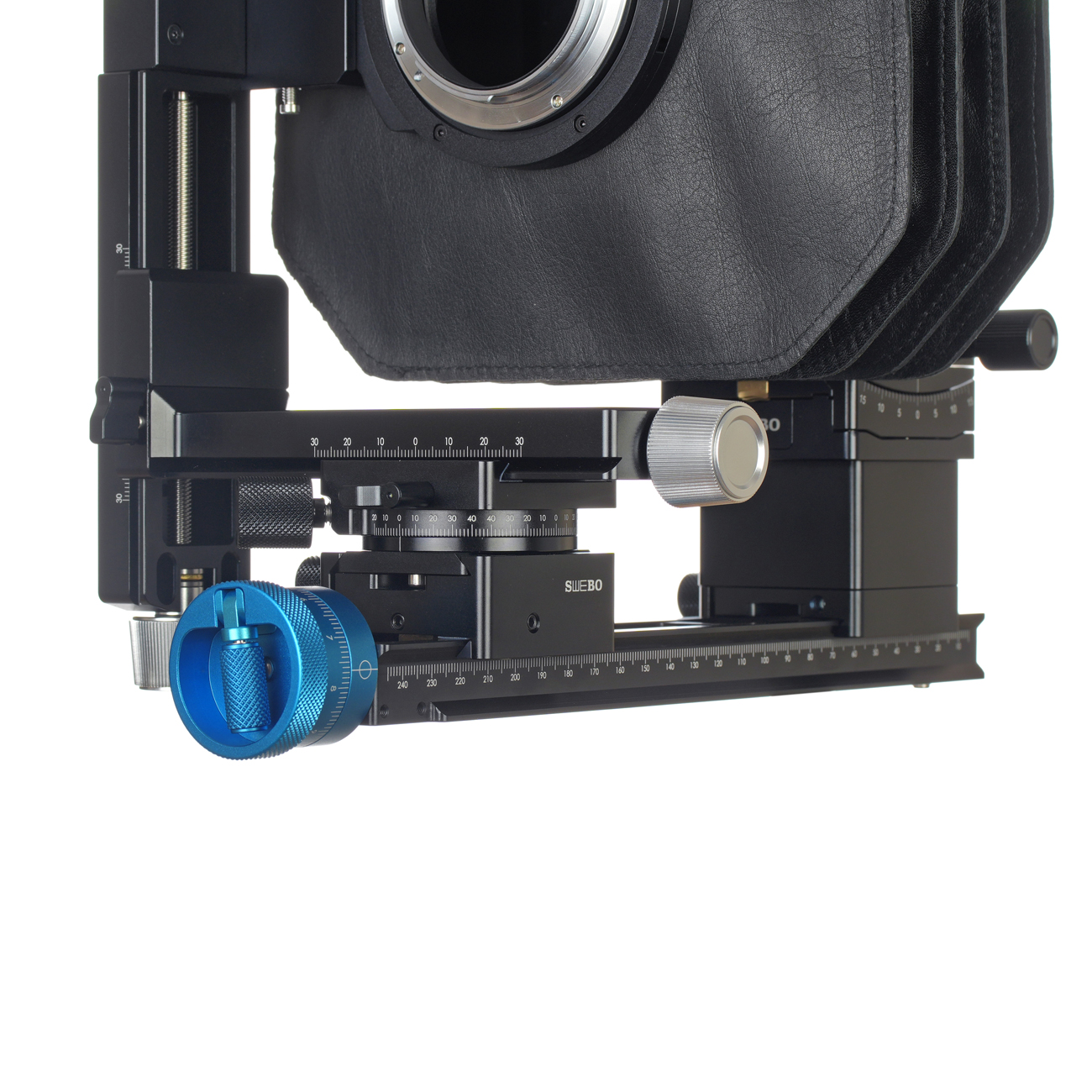
The TCS20it combines the compact TCS20 platform with manual rear swing. Front tilt and swing control the plane of focus, while rear shift and rise/fall reposition the image area within the lens image circle. A dedicated rear-focusing rail moves the camera side for focus adjustment.
Independent front and rear movements
The front standard provides worm-geared tilt of ±15° and swing of ±20°. These movements are self-locking. At the rear, horizontal shift and vertical rise/fall each extend to ±30 mm. The 4 mm lead-screw movements provide self-locking support; use the additional locks to secure the final position.
Rear swing extends to ±20°. Loosen its locking knob, turn the rear standard to the required angle, then lock it. Rear swing is manually positioned rather than worm driven.
Focusing and modular construction
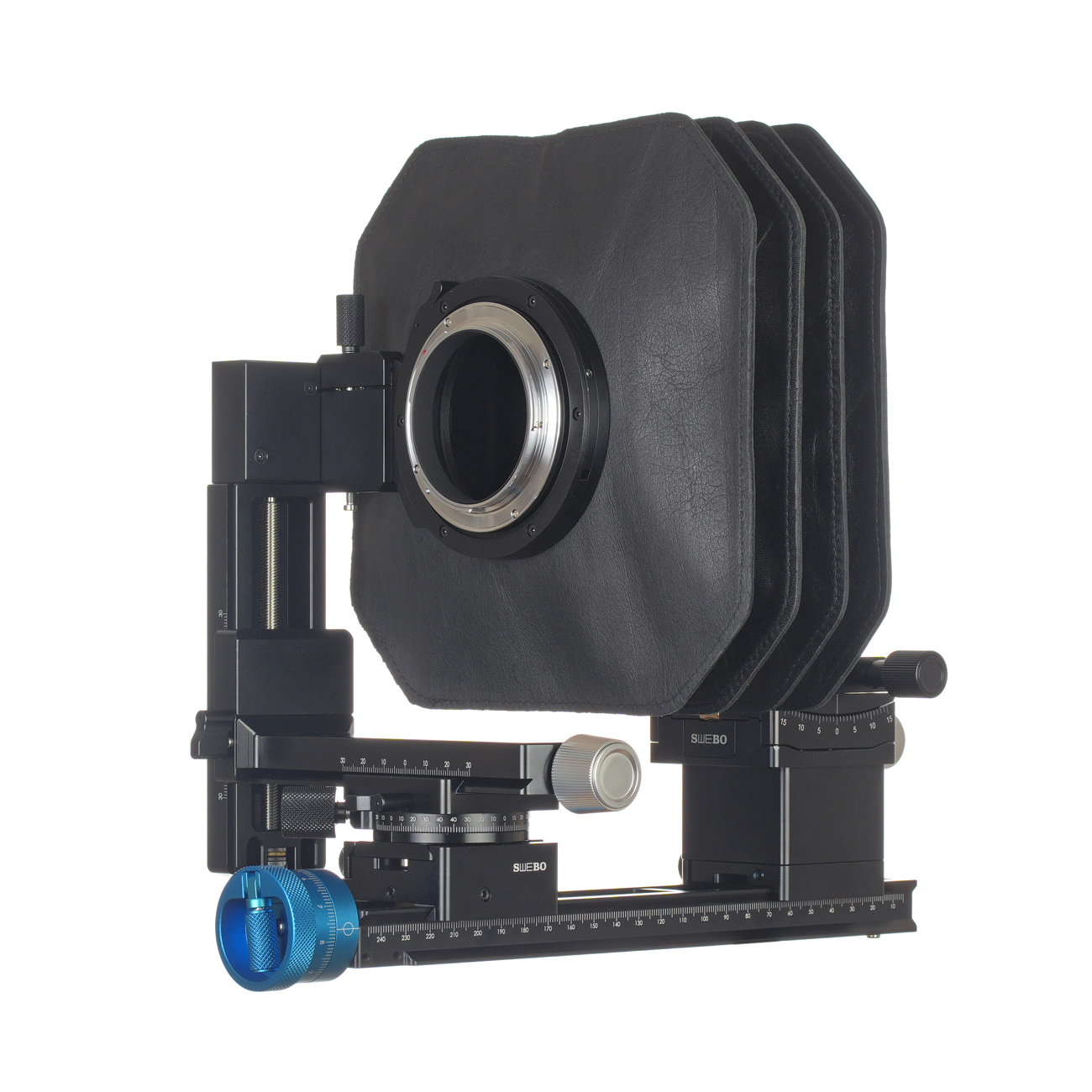
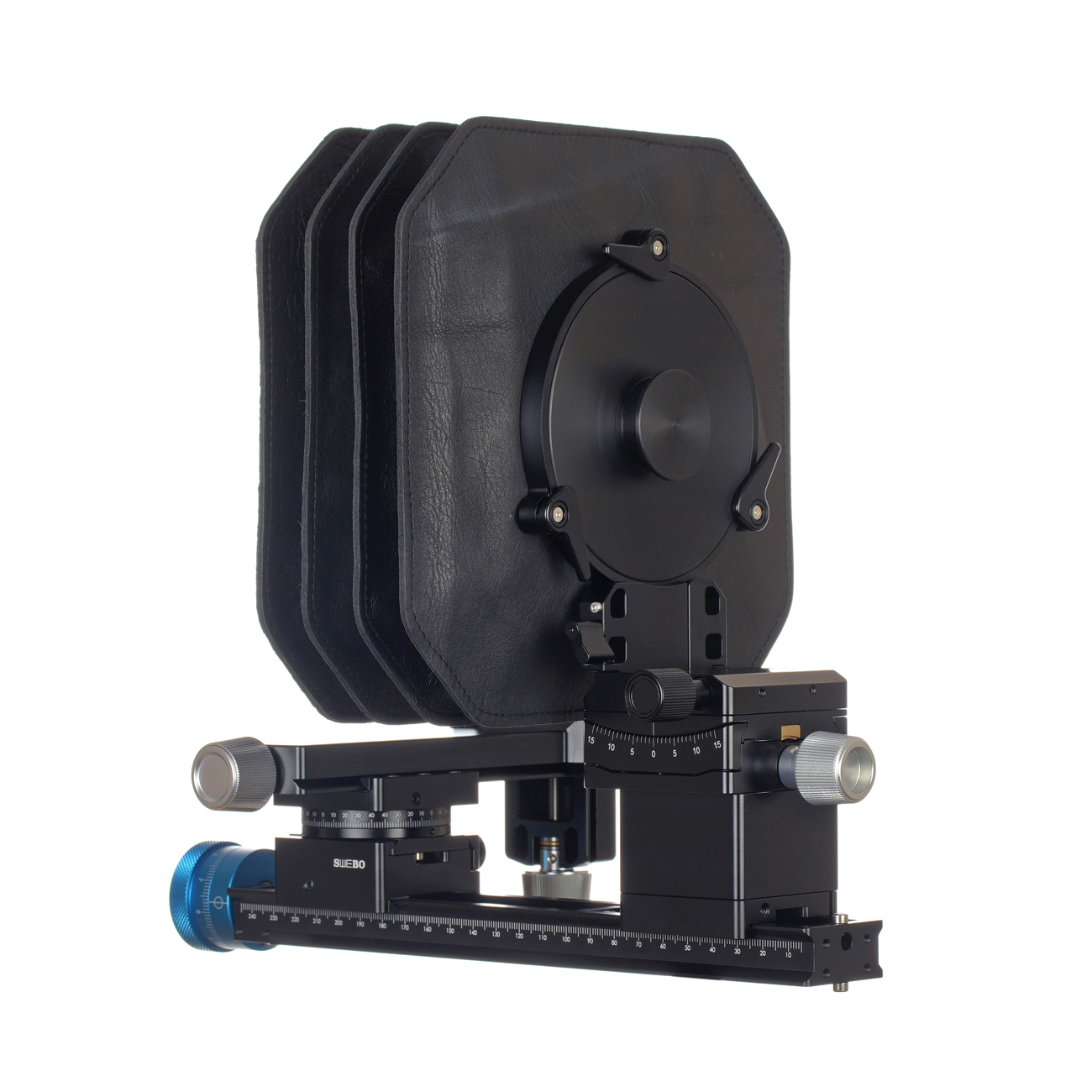
A folding crank supports quick repositioning, while the dial gives a clear reference for smaller adjustments. With the standard 4 mm screw lead and 100 dial divisions, one division corresponds to 0.04 mm of travel. A 1 mm lead configuration corresponds to 0.01 mm per division. These values describe scale increments, not measured positioning accuracy.
The standard configuration uses a 250 mm rail and four-fold bellows. Major assemblies connect without tools. The dedicated rear-focusing rail is not interchangeable with other TCS20 focusing rails.
Lens and camera interfaces
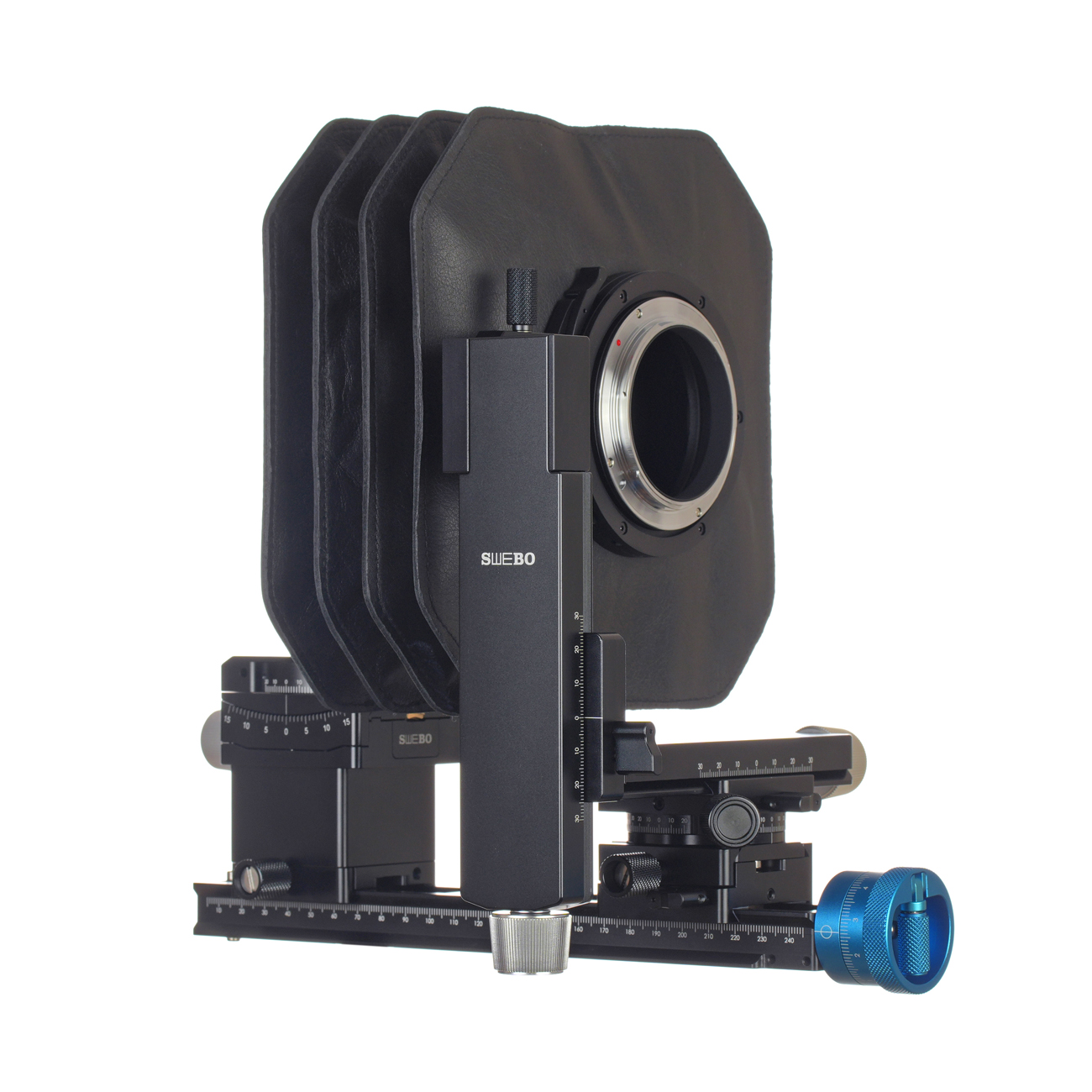
Interchangeable lens boards and camera-side interfaces connect the optical path. Choose the board for the lens mount or shutter and the rear interface for the camera or digital back. Bellows length, flange distance, mechanical clearance and lens image circle determine the usable focusing range and movements. Cameras and lenses shown illustrate configurations.
Specifications
| Front tilt / swing | ±15° / ±20° |
| Rear shift / rise-fall | ±30 mm / ±30 mm |
| Rear swing | ±20°, manual with lock |
| Standard rail | 250 mm |
| Weight | 1,380 g |
| Tripod mounting | Arca-type base; 1/4-inch and 3/8-inch threads |